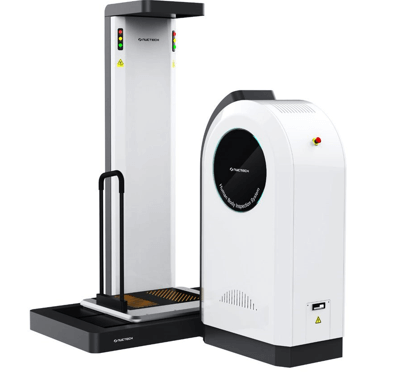
In the ever-evolving landscape of airport security, full body scanners have become indispensable. These advanced machines, capable of detecting concealed threats, significantly enhance passenger safety. They utilize various technologies to ensure that no dangerous items slip through unnoticed. One of the most widely recognized technologies is full body scanners.
One can find full body scanners in almost every major airport worldwide. They come in different types, each with its unique capabilities and advantages. For instance, the X-ray body scanner HT Series uses low-dose X-ray transmission imaging technology. It’s like having an all-seeing eye that can spot hidden items without physical contact. The Millimeter Wave Human Body Scanner MW Series, on the other hand, employs millimeter radio wave technology to detect concealed objects inside or under clothing with remarkable accuracy and speed.
The terahertz imaging body scanner TH Series is another marvel. This system uses the terahertz signal emitted by the human body to detect objects hidden under clothing. Imagine standing still for just a moment while the scanner does its job, and you’re free to board your flight knowing everyone’s safety is ensured. These technologies highlight how far we’ve come in making air travel secure and efficient.
How radiation detection devices keep us safe
Radiation detection devices play a crucial role in maintaining safety across various sectors, from nuclear plants to large public events. These devices are designed to detect gamma rays and neutron radiation, alerting authorities to any potential threats.
Vehicle Radiation Portal Monitors are often stationed at border crossings and seaports. They can detect radioactive materials hidden in vehicles or cargo containers, preventing illicit transport of dangerous substances. Radiation monitoring systems for persons ensure that individuals entering sensitive areas are not carrying radioactive material unknowingly.
Handheld radiation monitors provide flexibility and mobility for security personnel. These portable devices, often referred to as a rad detector, can be used in various settings, from nuclear power plants to crowded public events. They offer real-time data on radiation levels, ensuring swift action if any anomaly is detected. Environmental radiation monitoring systems take this a step further by providing comprehensive data on radiation levels in a given area, including meteorological conditions.
From nuclear plants to public events
Nuclear power plants are one of the most critical applications for radiation detection devices. Ensuring the safety of these facilities is paramount, and advanced monitoring systems help achieve this goal. These systems continuously monitor radiation levels, providing early warnings of any potential issues.
At large public events, the safety of attendees is always a top priority. Radiation detection devices are used to scan the area and attendees for any signs of radioactive materials. This proactive approach helps prevent potential threats before they can cause harm.
Balancing safety and privacy concerns
While full body scanners and radiation detection devices significantly enhance security, they also raise privacy concerns. It’s essential to balance these concerns with the need for safety. Many people worry about the invasive nature of these scans and the potential misuse of data.
To address these concerns, manufacturers have implemented various measures to protect privacy. For instance, many full body scanners use software that generates generic images rather than detailed body scans. This ensures that security personnel can identify threats without compromising personal privacy.
Moreover, strict regulations govern the use of these technologies, ensuring that they are used responsibly and ethically. Transparency about how these devices work and what measures are in place to protect privacy can help alleviate public concerns.
The future of security technology
The future of security technology promises even more advanced solutions for keeping us safe. Continuous research and development efforts are driving innovation in this field, leading to new and improved devices.
One exciting development is the integration of artificial intelligence (AI) with security technologies. AI can enhance the accuracy and efficiency of threat detection, allowing for faster response times and reducing false alarms. Imagine a world where AI-powered scanners can instantly analyze data and identify potential threats more accurately than ever before.
Another promising area is the development of more compact and portable devices. As technology advances, it becomes possible to create smaller yet highly effective security tools that can be easily deployed in various settings. This flexibility will be invaluable in addressing evolving security challenges.
See also: Background:-Qrblsjw2vi= Technology
The role of instech netherlands
Companies like InsTech Netherlands are at the forefront of these advancements. Their commitment to innovation and customization ensures that they meet the specific needs of their customers while staying ahead of emerging threats.
With a presence in over 170 countries and 400 airports worldwide, InsTech Netherlands has a proven track record of delivering reliable security solutions. Their range of products, from full body scanners to radiation detection devices, showcases their expertise and dedication to enhancing global security.
As we look to the future, it’s clear that InsTech Netherlands will continue to play a pivotal role in shaping the landscape of security technology. Their ongoing efforts to develop cutting-edge solutions will help ensure a safer world for all.