There’s nothing quite like gazing at a crystal-clear pool on a warm afternoon—water shimmering, tiles gleaming, ready for a refreshing dip. But behind that pristine surface lies a reality every pool owner knows too well: hours spent skimming leaves, vacuuming floors, scrubbing walls, and wrestling with hoses. Traditional cleaning methods demand your weekends, drain your energy, and still leave spots missed or algae creeping back within days. The inconsistency alone is enough to make you consider filling the whole thing in with concrete.
Enter the pool cleaning robot—a quiet revolution in automated pool maintenance that handles the dirty work while you do literally anything else. These intelligent machines navigate every inch of your pool, scrubbing surfaces and filtering debris with a precision that manual cleaning simply cannot match. In this article, we’ll explore exactly how these devices work, break down the features that matter most, help you choose the right model for your specific pool, and walk you through setup and long-term care. It’s time to reclaim your weekends.
How Robotic Pool Cleaners Work: The Magic Behind Automated Pool Maintenance
At their core, robotic pool cleaners are self-contained cleaning machines that operate independently from your pool’s filtration system. Unlike older pressure-side cleaners that relied on your pump’s water flow or suction-side models that attached to your skimmer and often clogged, today’s robots carry everything they need onboard. Cordless models run on rechargeable lithium-ion batteries, while corded versions draw power through a low-voltage transformer that converts household current to a safe level for underwater operation.
The anatomy of a robotic cleaner is elegantly simple. Wheels or tracks grip the pool surface—floor, walls, even the waterline—while rotating scrubbing brushes loosen algae, biofilm, and stuck-on grime. A dedicated internal pump draws water through the unit, trapping debris in an integrated filter basket or cartridge before expelling clean water back into the pool. This means your pool’s main pump and filter handle less load, extending their lifespan.
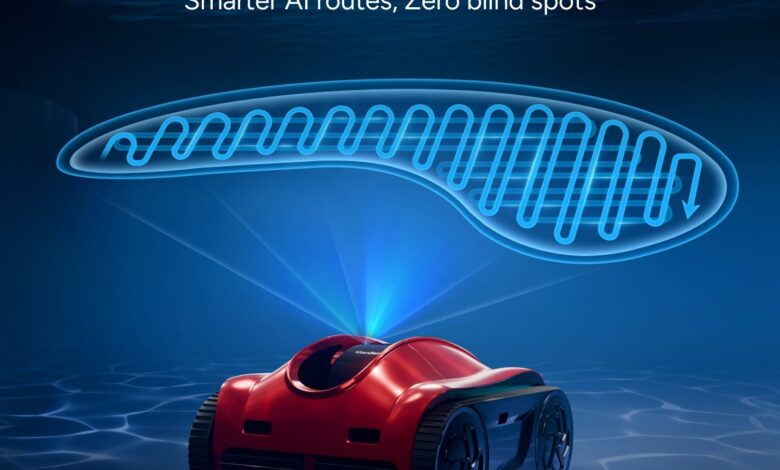
What truly separates modern automated pool maintenance from its predecessors is intelligent navigation. Gyroscopes measure orientation, infrared or ultrasonic sensors detect walls and obstacles, and onboard algorithms calculate efficient cleaning paths. Rather than bouncing randomly and hoping to cover every surface, these robots map your pool’s dimensions and execute systematic sweeps—ensuring no corner, step, or curve goes untouched. The result is thorough, repeatable pool cleaning that finishes in a predictable timeframe, every single session.
See also: 12 Slab Layout Software Tools Ranked by What Actually Matters in 2026
Essential Features of a Modern Pool Cleaning Robot
Not all robotic cleaners are created equal. Understanding the features that separate adequate machines from exceptional ones helps you invest wisely and avoid buyer’s remorse. Here’s what matters most when evaluating your options.
Freedom of Movement: The Rise of Cordless Robotic Pool Cleaners
Cordless robotic pool cleaners have transformed the user experience. Without a trailing cable, there’s nothing to tangle on ladders, snag on handrails, or limit which direction the robot can travel. You simply drop the unit in and walk away. The tradeoff is runtime—most cordless models operate between 60 and 150 minutes per charge, which suits small to mid-sized pools perfectly but may require multiple sessions for larger bodies of water. Lithium-ion battery technology continues to improve, delivering longer cycles and faster recharging with each generation. If your pool is compact and you value grab-and-go simplicity, cordless is hard to beat.
Smart Navigation and Efficient Cleaning Cycles
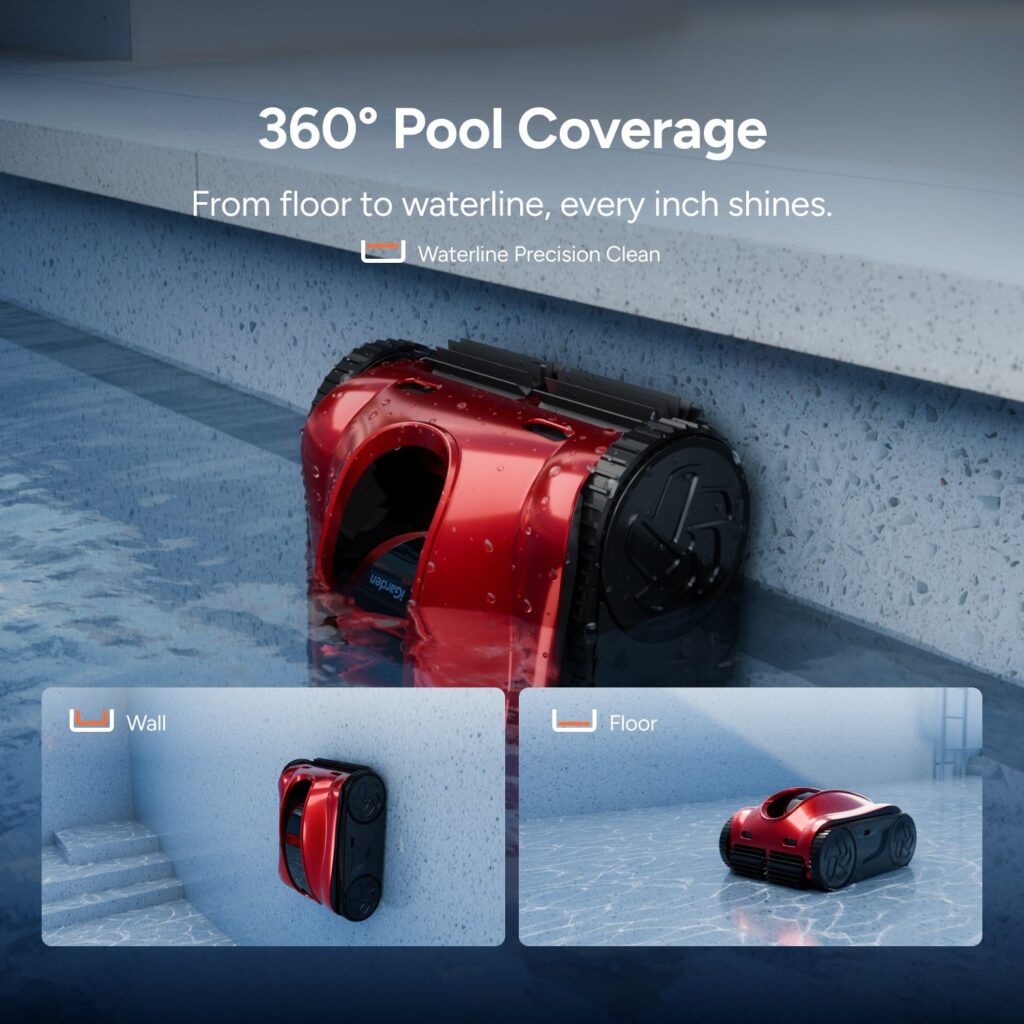
Navigation intelligence determines whether your robot cleans methodically or wanders aimlessly. Smart-mapping models scan your pool’s geometry and execute calculated paths across the floor, up walls, and along the waterline—completing the job faster with fewer missed patches. Random-pattern robots cost less but take longer and may skip areas entirely. Look for scheduled cleaning capability, which lets the robot launch itself at preset times, and quick-clean modes that handle light debris between deep sessions without running a full cycle.
Filtration Power: Capturing Debris from Fine to Large
A robot’s filtration system dictates what it actually removes from your water. Ultra-fine cartridges catch particles as small as two microns—pollen, dust, and microscopic algae—while mesh bag systems handle larger debris like leaves and twigs with generous capacity. The best designs offer dual-layer filtration or interchangeable media so you can adapt to seasonal conditions. Effective onboard filtration reduces the burden on your main pool filter and decreases chemical demand, since less organic matter means less chlorine consumed neutralizing contaminants.
Durability and Ease of Use
A well-built robot features tangle-free brush designs that won’t jam on hair or string, reinforced treads that grip without marking surfaces, and tool-free filter access for quick rinsing. App connectivity and remote controls add genuine value for modern users—letting you steer the robot to a trouble spot, adjust cleaning schedules from your phone, or receive maintenance reminders. Smart home platforms like iGarden make it increasingly possible to integrate pool cleaning robots alongside other outdoor automation, creating a unified management experience for your entire backyard ecosystem. These pool cleaner features collectively determine whether your robot remains a reliable workhorse or becomes an expensive shelf ornament within a year.
Choosing the Right Pool Cleaning Robot for Your Needs
Selecting the ideal robotic cleaner starts with honest assessment of your pool’s characteristics. Pool size and shape matter most—a compact plunge pool under 30 feet long pairs beautifully with a cordless model offering 90 minutes of runtime, while an expansive freeform pool with a deep end demands either a corded robot with unlimited operation time or a high-capacity cordless unit that won’t quit mid-session. Measure your pool’s longest dimension and maximum depth before shopping, since not every robot climbs steep walls or reaches beyond certain depths.
Next, consider your primary debris challenge. If mature trees dump leaves and seed pods weekly, prioritize models with large-capacity mesh baskets and wide intake openings that won’t clog. Pools in arid or coastal areas battling fine sand and dust benefit more from ultra-fine cartridge filtration that captures particles invisible to the naked eye. Pollen-heavy environments in spring call for that same fine filtration paired with frequent scheduled cycles to prevent buildup.
Your pool’s surface material influences brush selection. Textured plaster and pebble finishes need aggressive PVA brushes that dig into pores, while vinyl liners and fiberglass demand softer rubber brushes that clean without scratching or lifting seams. Budget naturally plays a role—corded models with smart navigation deliver premium cleaning at lower price points since there’s no battery to engineer, whereas cordless convenience commands a premium. For a large, leaf-heavy pool with tile walls and integrated spa, a corded smart-mapping robot with interchangeable filter media covers every base. For a smaller vinyl-lined pool used mainly on weekends, a mid-range cordless unit with scheduling capability keeps things effortless without overinvesting.
Getting Started: Your Step-by-Step Guide to Automated Cleaning
Setting up your robotic pool cleaner for the first time is straightforward, but following the right sequence ensures optimal performance from day one. Start by unpacking the unit and reading the manual thoroughly—every model has specific requirements for initial charging, filter installation, and water depth limitations. For cordless models, fully charge the battery before the maiden voyage; this conditions the cells and establishes maximum runtime capacity. For corded units, connect the transformer to a GFCI-protected outlet and lay the cable out straight in the sun for an hour to relax any coils from packaging.
When you’re ready to clean, lower the robot into the water at an angle to release trapped air bubbles—submerging it flat can create air pockets that reduce suction and wall-climbing grip. For corded models, ensure enough slack in the cable so the robot reaches every corner without pulling taut, but avoid excessive loops that invite tangling. Press start or initiate the cycle through your app, then step back and let the machine work.
After the cycle completes, retrieve the robot promptly rather than leaving it submerged for hours. Remove the filter basket or cartridge immediately and rinse it with a garden hose until water runs clear—dried debris is significantly harder to remove and reduces filtration efficiency over time. Inspect the brushes and treads briefly for wrapped hair or string. Store the unit upright in a shaded area away from direct sunlight, which degrades plastic housings and battery health. Consistent post-clean habits take under five minutes and dramatically extend your robot’s working life.
Maximizing Performance and Troubleshooting Common Issues
Long-term satisfaction with your robotic pool cleaner depends on consistent maintenance habits and knowing how to diagnose problems quickly. Beyond the post-clean rinse, dedicate five minutes each week to inspecting brush bristles for wear and checking treads for embedded pebbles or debris that reduce grip. Every month, soak filter cartridges in a diluted filter-cleaning solution to dissolve oils and mineral deposits that rinsing alone won’t remove. Store your robot in a cool, shaded location—prolonged UV exposure degrades plastic housings, and extreme heat accelerates battery deterioration in cordless models.
When issues arise, most have simple fixes. If your robot won’t start, verify that the battery is fully charged or that the transformer’s indicator light confirms power delivery; check that the timer or app schedule hasn’t been accidentally cleared. Poor navigation—where the robot circles aimlessly or fails to climb walls—often traces back to dirty drive tracks losing traction, a tangled cord restricting movement, or debris wedged in the wheel housing. Remove obstructions and wipe the tracks clean. Incomplete cleaning cycles typically indicate a clogged filter reducing suction power, worn brushes that no longer agitate surfaces effectively, or an impeller partially blocked by hair or fibrous material. Replace brushes when bristles appear flattened or shortened by more than half their original length. If you’ve addressed all mechanical causes and the robot still underperforms, contact the manufacturer’s support team—internal pump failures or sensor malfunctions require professional diagnosis rather than guesswork that might void your warranty.
Reclaim Your Weekends With Hands-Off Pool Care
Robotic pool cleaners have fundamentally reshaped what it means to own a pool. What once demanded hours of manual scrubbing, vacuuming, and chemical balancing now happens quietly in the background—a machine methodically covering every surface while you spend your time on things that actually matter. The transformation isn’t incremental; it’s a complete shift from reactive, labor-intensive upkeep to proactive, hands-off automated pool maintenance.
The path to that effortless experience comes down to a few deliberate choices. Understanding how these robots navigate, filter, and scrub helps you distinguish marketing hype from genuine capability. Matching a model to your pool’s size, surface, and debris challenges ensures you’re not overpaying for features you won’t use or underbuying and ending up frustrated. And once your robot arrives, proper setup habits and consistent five-minute post-clean routines protect your investment for years of reliable service.
Looking ahead, the technology only improves—smarter navigation, longer battery life, finer filtration. But even today’s models deliver something pool owners a decade ago could only dream about: consistently crystal-clear water without sacrificing a single weekend to get it. Your pool exists for enjoyment. Let the robot handle the rest.